Admission Open         Admission Open         Admission Open         Admission Open         Admission Open         Admission Open        

School Girl Critically Thinking
Post

Why Critical Thinking Is More Important Than Memorisation

In today’s rapidly changing world, success is no longer determined by how much a student can memorise. Instead, it depends on how effectively they can analyse information, solve problems, ask thoughtful questions, and make informed decisions. While memorisation has its place in learning, critical thinking is the skill that empowers students to apply knowledge in...

In today’s rapidly changing world, success is no longer determined by how much a student can memorise. Instead, it depends on how effectively they can analyse information, solve problems, ask thoughtful questions, and make informed decisions. While memorisation has its place in learning, critical thinking is the skill that empowers students to apply knowledge in meaningful ways.

At Avabai Petit School, we believe education should go beyond remembering facts. As an ICSE girls’ school, our approach focuses on nurturing curious, independent thinkers who are prepared not only for examinations but also for higher education, careers, leadership, and life.

This article explores why critical thinking has become one of the most important skills for students and how a learning environment that encourages inquiry and exploration helps girls become confident learners and future leaders.

What Is Critical Thinking?

Critical thinking is the ability to:

  • Analyse information objectively
  • Evaluate evidence before forming opinions
  • Solve unfamiliar problems
  • Think creatively
  • Ask meaningful questions
  • Make informed decisions
  • Apply knowledge to real-life situations

Unlike rote memorisation, which focuses on recalling information, critical thinking helps students understand why, how, and when to use what they have learned.

For example:

A student may memorise Newton’s Laws of Motion for an examination.

A critical thinker, however, can explain why seat belts save lives, predict the outcome of a moving object, and connect scientific principles to everyday experiences.

That understanding lasts far longer than memorised definitions.

Why Memorisation Alone Is No Longer Enough

The world students will enter after school is vastly different from previous generations.

Information is available instantly through technology. Employers and universities increasingly value students who can:

  • Think independently
  • Solve complex problems
  • Collaborate with others
  • Communicate ideas clearly
  • Adapt to new situations
  • Innovate with confidence

Remembering textbook answers may help in some examinations, but it rarely prepares students for real-world challenges.

Today’s learners need to understand concepts deeply so they can apply them in unfamiliar situations.

The Myth: "Good Marks Only Come from Rote Learning"

One of the most common misconceptions among parents is that memorising answers guarantees academic success.

While memorisation can help students recall formulas, definitions, or historical dates, it often falls short when examinations assess understanding, application, and reasoning.

Modern assessments, particularly within the ICSE curriculum, increasingly reward students who can:

  • Interpret information
  • Explain concepts
  • Compare ideas
  • Analyse situations
  • Apply knowledge in different contexts

Students who genuinely understand a concept often perform better because they can answer both familiar and unexpected questions with confidence.

How Critical Thinking Improves Academic Performance

Many parents assume that encouraging discussion and exploration takes time away from studies.

In reality, it strengthens academic outcomes.

When students understand concepts instead of memorising them:

  • Learning becomes easier
  • Revision becomes more meaningful
  • They retain information longer
  • They perform better in application-based questions
  • They become more confident during examinations

Understanding creates long-term learning, whereas memorisation often fades soon after exams.

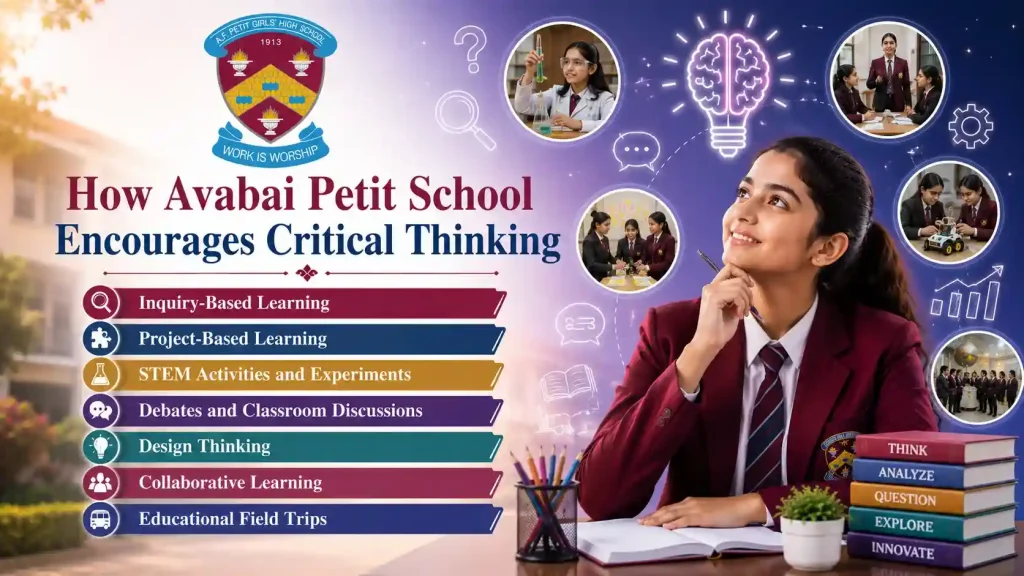
How Avabai Petit School Encourages Critical Thinking

School Girl Critical Thinking

At Avabai Petit School, learning is designed to help girls become active participants rather than passive recipients of information.

Inquiry-Based Learning

Teachers encourage students to ask questions before providing answers.

Instead of simply explaining a scientific concept, students investigate, observe, and discover patterns themselves.

This curiosity develops analytical thinking from an early age.

Project-Based Learning

Projects allow students to research topics, collaborate with classmates, analyse findings, and present their conclusions.

Whether exploring environmental sustainability or local history, students learn how classroom knowledge connects to the real world.

STEM Activities and Experiments

Science and mathematics become exciting when students test ideas through practical experiments.

Rather than memorising formulas, students learn why those formulas work.

Hands-on STEM activities help develop observation, reasoning, and problem-solving skills.

Debates and Classroom Discussions

Healthy discussions encourage students to:

  • Listen respectfully
  • Consider multiple viewpoints
  • Support opinions with evidence
  • Think before responding

These experiences build confidence while strengthening communication and reasoning.

Design Thinking

Students learn to:

  • Identify problems
  • Understand different perspectives
  • Generate ideas
  • Test solutions
  • Improve based on feedback

This process nurtures creativity alongside logical thinking.

Collaborative Learning

Working in teams teaches students that many problems have multiple solutions.

Collaboration develops:

  • Leadership
  • Communication
  • Decision-making
  • Empathy
  • Responsibility

These are essential life skills that extend well beyond academics.

Educational Field Trips

Learning outside the classroom transforms abstract concepts into real experiences.

A visit to a museum, science centre, heritage site, or nature reserve encourages students to observe, question, and connect classroom learning with the world around them.

These experiences make learning memorable because students discover knowledge firsthand rather than simply reading about it.

Real-Life Classroom Example

Imagine a Class VI science lesson on water conservation.

Instead of asking students to memorise methods of saving water, teachers divide the class into small groups.

Each team investigates water usage within the school, identifies areas where water is wasted, proposes practical solutions, and presents recommendations to classmates.

Students are not simply learning about conservation; they are analysing data, solving problems, communicating ideas, and thinking like responsible citizens.

That is critical thinking in action.

Another Example: Mathematics Beyond Memorisation

A mathematics lesson may begin with a real-life budgeting challenge rather than a formula.

Students calculate costs, compare options, justify decisions, and explain their reasoning.

They are learning mathematics while simultaneously developing financial awareness and logical thinking.

This approach helps students appreciate why mathematics matters in everyday life.

Why Critical Thinking Matters Beyond School

Critical thinking prepares students for every stage of life.

It helps them:

  • Make responsible decisions
  • Solve unfamiliar problems
  • Adapt to changing technologies
  • Communicate effectively
  • Become confident leaders
  • Evaluate online information responsibly
  • Build resilience
  • Think independently

These qualities are essential in higher education, entrepreneurship, research, business, healthcare, technology, law, public service, and countless other fields.

The ICSE Advantage

The ICSE curriculum is recognised for encouraging conceptual understanding rather than surface-level learning.

Students regularly engage in:

  • Analytical writing
  • Practical investigations
  • Literature interpretation
  • Project work
  • Research assignments
  • Application-oriented assessments

This emphasis naturally supports the development of critical thinking while maintaining strong academic standards.

How Parents Can Encourage Critical Thinking at Home

Schools play an important role, but learning continues at home.

Parents can encourage critical thinking by:

  • Asking open-ended questions
  • Encouraging children to explain their reasoning
  • Allowing them to make age-appropriate decisions
  • Reading together and discussing different viewpoints
  • Playing strategy games and puzzles
  • Supporting curiosity instead of immediately giving answers
  • Encouraging exploration and creativity

Small daily conversations often become powerful learning opportunities.

Final Thoughts

Knowledge remains important, but in today’s world, knowing how to think is even more valuable than knowing what to remember.

Students who develop curiosity, confidence, creativity, and analytical thinking are better prepared for examinations, university education, professional success, and responsible citizenship.

At Avabai Petit School, we are committed to creating a learning environment where every girl is encouraged to question, explore, collaborate, and think independently. By combining the strengths of the ICSE curriculum with inquiry-based learning, STEM education, collaborative projects, debates, design thinking, and experiential learning, we help our students build the skills they need not only to achieve academic excellence but also to thrive in an ever-changing world.

Ready to Learn More?

If you’re looking for a school that nurtures confident, curious, and future-ready learners, enquire about admissions at Avabai Petit School. Discover how our holistic approach to education helps every girl develop the critical thinking skills needed for lifelong success.

Is memorisation completely unnecessary?

No. Memorisation still has value for learning vocabulary, multiplication tables, formulas, and foundational facts. However, these should serve as building blocks for deeper understanding rather than being the final goal.

Can critical thinking improve examination results?

Yes. Students who understand concepts deeply are generally better equipped to answer application-based, analytical, and higher-order thinking questions, leading to stronger academic performance.

At what age should children start developing critical thinking?

Critical thinking begins in early childhood through questioning, exploration, observation, and problem-solving. The earlier these habits are encouraged, the more naturally they develop over time.

Why is critical thinking especially important for girls?

Critical thinking helps girls develop confidence, independence, leadership, effective communication, and informed decision-making. These qualities empower them to succeed academically and thrive in higher education, careers, and leadership roles.

3 school girls visioning the sucess and leadership
Post

How Girls’ Schools Foster Leadership, Independence and Academic Excellence

Choosing the right school is one of the most important decisions parents make. While academic performance often takes center stage, today’s education is about much more than examination scores. It is about developing confident leaders, independent thinkers, compassionate citizens, and lifelong learners who are prepared to succeed in an ever-changing world. Girls’ schools have long...

Choosing the right school is one of the most important decisions parents make. While academic performance often takes center stage, today’s education is about much more than examination scores. It is about developing confident leaders, independent thinkers, compassionate citizens, and lifelong learners who are prepared to succeed in an ever-changing world.

Girls’ schools have long played a significant role in nurturing these qualities. Research from around the world, coupled with evolving educational practices in India, suggests that girls often thrive in environments where they are encouraged to take initiative, participate without hesitation, and explore their full potential.

At Avabai Petit School, we believe education is not only about academic excellence but also about empowering every girl to discover her voice, build resilience, and become a leader in whichever path she chooses.

Why Girls' Schools Continue to Matter

Today’s world demands much more than subject knowledge. Employers, universities, and communities value communication, leadership, critical thinking, collaboration, creativity, and emotional intelligence.

The National Education Policy (NEP) 2020 also emphasizes holistic development, experiential learning, critical thinking, and life skills alongside academic achievement.

Girls’ schools are uniquely positioned to provide an environment where students can confidently develop these competencies without being limited by traditional gender expectations.

Instead of competing for opportunities traditionally dominated by boys, every leadership role, from student council to sports captain, is naturally filled by girls. This creates an environment where leadership becomes an expectation rather than an exception.

Leadership Becomes Part of Everyday School Life

Leadership isn’t developed during a single workshop. It grows through consistent opportunities to make decisions, solve problems, collaborate, and inspire others.

At Avabai Petit School, students are encouraged to lead through various platforms, including:

  • Student Council
  • Prefect System
  • House Captains
  • School Clubs
  • Public Speaking Activities
  • Sports Leadership
  • Mentorship Programs
  • Cultural Committees
  • Community Initiatives

These experiences help students understand responsibility, accountability, teamwork, and communication from an early age.

Instead of waiting for someone else to take charge, girls learn that their ideas matter and that they have the ability to influence positive change.

Leadership Extends Beyond the Classroom

Leadership today is not defined only by titles.

It is reflected when students:

  • Organize school events
  • Mentor younger students
  • Lead environmental campaigns
  • Coordinate cultural programs
  • Represent their school in competitions
  • Participate in debates and Model United Nations
  • Volunteer for community service projects

Each experience develops confidence while teaching practical skills such as planning, conflict resolution, public speaking, and teamwork.

These are precisely the qualities universities and future employers increasingly seek.

Building Independence Through Everyday Learning

Independence is not something students suddenly acquire after graduation.

It develops gradually through daily learning experiences.

Modern education encourages students to become active participants rather than passive learners.

At Avabai Petit School, project-based learning and student-led initiatives encourage girls to:

  • Research independently
  • Ask meaningful questions
  • Present original ideas
  • Work collaboratively
  • Solve real-world challenges
  • Make informed decisions
  • Reflect on their own learning

Instead of simply memorizing information, students learn how to think.

That difference prepares them for higher education and future careers where adaptability matters more than rote learning.

Project-Based Learning Creates Future-Ready Students

Project-based learning has become one of the defining features of modern education.

Rather than focusing solely on textbooks, students investigate real-world topics through research, experimentation, collaboration, and presentation.

For example, students may:

  • Design sustainability projects
  • Develop community awareness campaigns
  • Conduct science investigations
  • Create business ideas
  • Build digital presentations
  • Research historical events from multiple perspectives

These projects combine academic knowledge with practical application, making learning more meaningful and memorable.

Students also become comfortable presenting ideas, accepting feedback, and refining their work, essential skills for university and professional life.

Girls Gain the Confidence to Speak Up

One of the most valuable outcomes of a girls’ school environment is increased participation.

When every classroom discussion, debate, leadership role, science demonstration, and sports event is led by girls, students often feel more comfortable expressing themselves.

Regular opportunities in:

  • Debates
  • Elocution competitions
  • Public speaking
  • Assemblies
  • Group discussions
  • Theatre
  • Presentations

help students become confident communicators.

Over time, speaking in front of an audience becomes less intimidating and more natural.

This confidence often carries into university interviews, workplace presentations, entrepreneurship, and leadership roles later in life.

Academic Excellence Is About More Than Marks

Academic success is important, but true excellence goes beyond examination results.

A strong academic foundation combines:

  • Curiosity
  • Discipline
  • Critical thinking
  • Problem-solving
  • Consistency
  • Collaboration
  • Creativity

Girls’ schools often create learning environments where academic achievement and personal growth reinforce each other.

Students are encouraged not only to perform well but also to understand concepts deeply, ask questions, and apply knowledge across different subjects.

This balanced approach aligns closely with the goals outlined in India’s NEP 2020, which advocates competency-based and experiential learning.

Teachers Become Mentors

One of the strongest influences on a student’s confidence is a supportive teacher.

Beyond delivering lessons, teachers guide students through:

  • Goal setting
  • Personal development
  • Emotional well-being
  • Academic planning
  • Leadership opportunities
  • Career aspirations

Mentorship encourages students to take ownership of their learning while knowing they have trusted adults who believe in their potential.

This combination of independence and guidance creates a healthy learning environment where students feel motivated to challenge themselves.

Sports Teach Leadership in Action

Leadership is equally important outside academics.

Participation in sports develops qualities that cannot always be learned from textbooks.

Students learn:

  • Discipline
  • Teamwork
  • Strategic thinking
  • Resilience
  • Decision-making
  • Time management
  • Respect for others

House competitions and team sports also provide opportunities for girls to captain teams, motivate peers, and make quick decisions under pressure.

These experiences build confidence that extends well beyond the playing field.

Clubs Help Students Discover Their Passions

Every student has unique strengths.

School clubs provide opportunities to explore interests beyond academics.

Whether through:

  • Science Clubs
  • Sports Clubs
  • Literary Clubs
  • Eco Clubs
  • Art & Craft
  • Music
  • Dance
  • Community Service

students develop creativity, leadership, collaboration, and innovation.

These experiences also help students discover future career interests while building portfolios for higher education.

Preparing Girls for the Future

The careers of tomorrow will require skills that continue to evolve alongside technology.

According to reports from the World Economic Forum, employers increasingly value skills such as analytical thinking, resilience, creativity, leadership, communication, and lifelong learning.

Girls who develop these competencies during school are better prepared for higher education and future careers.

Education today is about preparing students not just for examinations, but for life.

Breaking Stereotypes Through Opportunity

Historically, certain leadership roles in STEM, business, politics, and sports have been male-dominated.

Girls’ schools help challenge these stereotypes by ensuring students actively participate across every discipline.

Whether leading robotics competitions, science exhibitions, coding projects, sports tournaments, or debates, girls learn that no field is beyond their reach.

This mindset encourages ambition and expands career aspirations.

A Supportive Community Builds Lifelong Confidence

Confidence develops when students feel supported.

Girls’ schools often foster communities where collaboration is valued alongside healthy competition.

Students celebrate one another’s achievements, work together on projects, and develop meaningful friendships.

These relationships contribute to emotional well-being while helping students build strong interpersonal skills that remain valuable throughout adulthood.

How Avabai Petit School Nurtures Future Leaders

At Avabai Petit School, leadership is woven into everyday school life.

Students are encouraged to:

  • Take initiative through the Student Council and Prefect System
  • Lead their houses during competitions and school events
  • Participate confidently in public speaking and debates
  • Collaborate through clubs and extracurricular activities
  • Engage in project-based learning that develops critical thinking
  • Mentor younger students and contribute to the school community
  • Develop independence through student-led initiatives and decision-making opportunities

Our educational philosophy recognizes that every girl has unique strengths. By providing opportunities to lead, question, create, and collaborate, we help students grow into confident individuals prepared to contribute meaningfully to society.

Final Thoughts

A great education prepares students not only to achieve excellent grades but also to become thoughtful leaders, confident communicators, and compassionate individuals. Girls’ schools provide an environment where every student is encouraged to step forward, embrace responsibility, and realise her full potential.

At Avabai Petit School, we are committed to nurturing young women who are academically accomplished, socially responsible, and equipped with the confidence and independence to shape the future. Through leadership opportunities, experiential learning, and a culture of encouragement, we empower every girl to thrive, both inside the classroom and beyond.

Frequently Asked Questions
Are girls’ schools better for leadership development?

Girls’ schools provide students with frequent opportunities to take on leadership roles across academics, sports, cultural activities, and student governance. Regular participation helps build confidence, responsibility, and communication skills.

Do girls’ schools improve academic performance?

Research suggests that many girls benefit academically in environments where they feel confident participating, asking questions, and pursuing subjects without gender stereotypes influencing classroom dynamics.

How do girls’ schools build independence?

Through project-based learning, leadership opportunities, student-led initiatives, collaborative learning, and decision-making experiences that encourage responsibility and self-confidence.

Are girls’ schools aligned with modern education?

Yes. Many girls’ schools increasingly incorporate experiential learning, digital literacy, critical thinking, leadership development, and holistic education in line with the goals of India’s National Education Policy (NEP) 2020.

Why should parents consider a girls’ school?

Parents often choose girls’ schools because they offer a supportive environment where students can build confidence, leadership abilities, academic excellence, and life skills that prepare them for higher education and future careers.

School Girls Sitting infront of laptop and thinking
Post

Benefits of Girls-Only Education: What Research Says

TL;DR Research suggests that girls-only education can help students build confidence, strengthen leadership skills, participate more actively in the classroom, and develop a greater interest in STEM (Science, Technology, Engineering, and Mathematics). While a child’s success ultimately depends on the quality of education and support they receive, studies indicate that a nurturing girls-only learning environment...

TL;DR

Research suggests that girls-only education can help students build confidence, strengthen leadership skills, participate more actively in the classroom, and develop a greater interest in STEM (Science, Technology, Engineering, and Mathematics). While a child’s success ultimately depends on the quality of education and support they receive, studies indicate that a nurturing girls-only learning environment can empower students to thrive academically, socially, and emotionally. At Avabai Petit School, we see these benefits reflected in our students’ growth every day through a holistic approach that combines academic excellence, character development, and future-ready learning.

Benefits of Girls-Only Education: What Research Says

Choosing the right school is one of the most important decisions parents make for their daughter. While both co-educational and girls-only schools can provide excellent education, many parents wonder whether an all-girls learning environment offers unique advantages.

Educational research over the years has highlighted several positive outcomes associated with girls-only education, including increased classroom participation, stronger self-confidence, greater leadership opportunities, and improved engagement in STEM subjects. These findings closely align with what educators at Avabai Petit School have observed through years of nurturing young minds in a supportive and empowering environment.

Our philosophy has always been simple: when girls are encouraged to ask questions, lead with confidence, explore their interests, and believe in their abilities, they grow into capable individuals ready to make meaningful contributions to society.

Let’s explore what research says and why girls-only education continues to be a preferred choice for many families.

Research at a Glance

Research Finding

Why It Matters 

Increased classroom participation

Girls are often more willing to ask questions, share ideas, and participate in discussions. 

Stronger leadership development

Every leadership opportunity is available to girls, encouraging responsibility and decision-making. 

Greater confidence in STEM

Students are more likely to explore science, technology, engineering, and mathematics without gender stereotypes. 

Better academic engagement

Many girls demonstrate improved focus and active learning in supportive environments. 

Strong peer relationships

Collaborative learning often contributes to emotional well-being and mutual encouragement. 

Reduced gender bias

Students are encouraged to pursue their interests based on passion and ability rather than stereotypes.

Why Girls-Only Education Works

Girls-only education is not about limiting opportunities; it’s about creating an environment where girls can fully discover their potential without unnecessary social pressures or preconceived expectations.

Research indicates that when girls learn in supportive settings specifically designed for their development, they often become more confident learners, stronger communicators, and more willing to embrace leadership roles.

However, it’s important to remember that the school environment, teaching quality, values, and opportunities available to students ultimately shape these outcomes.

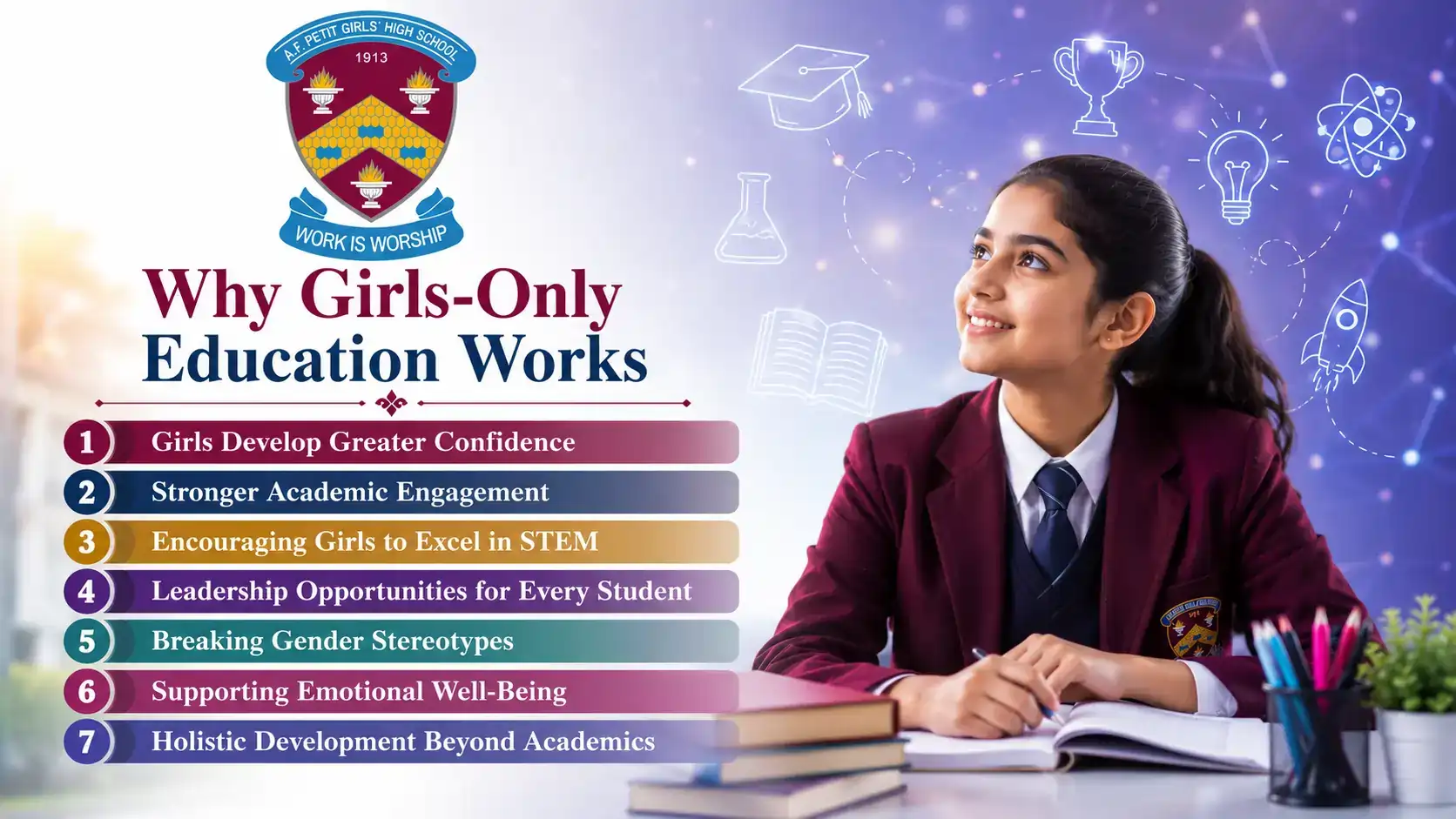
Girl Student Studying

1. Girls Develop Greater Confidence

Confidence is one of the most valuable skills a child can develop.

In girls-only classrooms, students often feel more comfortable expressing their opinions, asking questions, participating in debates, and taking intellectual risks without worrying about social expectations.

Educational research has shown that girls in these environments frequently become more active participants in classroom discussions, leading to improved communication and stronger self-belief.

At Avabai Petit School, confidence is nurtured through classroom interactions, cultural activities, public speaking opportunities, project-based learning, and leadership experiences that encourage every student to find her voice.

2. Stronger Academic Engagement

Academic success is about more than examination scores; it’s about curiosity, participation, and a genuine love for learning.

Studies suggest that girls in single-gender schools often:

  • Participate more actively during lessons.
  • Feel comfortable asking questions.
  • Take on challenging academic tasks with greater confidence.
  • Collaborate effectively with classmates.
  • Develop stronger learning habits.

When students are encouraged to focus on learning rather than social expectations, they often become more engaged and motivated throughout their educational journey.

3. Encouraging Girls to Excel in STEM

One of the most significant findings in educational research is the positive impact girls-only education can have on STEM participation.

Historically, societal stereotypes have sometimes discouraged girls from pursuing careers in science, engineering, technology, and mathematics.

In girls-only schools, students are often encouraged to see these subjects as opportunities rather than challenges.

By participating in science fairs, coding activities, robotics, mathematics competitions, and innovation projects, girls develop confidence to pursue careers in fields that are shaping the future.

As technology continues to transform the world, encouraging girls to embrace STEM education has become more important than ever.

4. Leadership Opportunities for Every Student

Leadership is learned through experience.

In a girls-only school, every leadership position, from student council and house captains to club presidents and event coordinators, is filled by girls.

These opportunities allow students to develop:

  • Decision-making skills
  • Teamwork
  • Responsibility
  • Public speaking
  • Critical thinking
  • Problem-solving
  • Event management

These experiences prepare students for future academic, professional, and personal success.

At Avabai Petit School, leadership is encouraged through academics, extracurricular activities, collaborative projects, and community engagement, helping students become confident individuals capable of making a positive impact.

5. Breaking Gender Stereotypes

Girls-only education provides an environment where students are encouraged to pursue their interests without being influenced by traditional gender expectations.

Instead of thinking certain subjects or activities are meant for boys, girls are inspired to explore:

  • Science
  • Mathematics
  • Sports
  • Technology
  • Entrepreneurship
  • Leadership
  • Creative Arts

Every child deserves the freedom to discover her strengths based on passion and ability rather than societal assumptions.

6. Supporting Emotional Well-Being

Academic achievement is only one aspect of a child’s development.

Emotional resilience, empathy, and self-esteem are equally important.

Supportive girls-only environments often encourage:

  • Respectful friendships
  • Positive self-image
  • Emotional intelligence
  • Open communication
  • Collaboration
  • Personal growth

When students feel safe and valued, they become more confident in overcoming challenges and embracing new opportunities.

7. Holistic Development Beyond Academics

Education today extends far beyond textbooks.

At Avabai Petit School, we believe every student should have opportunities to discover her unique talents through a balanced educational experience.

Students are encouraged to participate in:

  • Sports and athletics
  • Music and dance
  • Public speaking
  • Debate competitions
  • Art and creativity
  • Community service
  • Cultural programmes
  • Leadership initiatives

These experiences help develop creativity, discipline, collaboration, resilience, and confidence alongside academic excellence.

Preparing Girls for the Future

Today’s students are growing up in a world shaped by Artificial Intelligence, digital innovation, entrepreneurship, and global collaboration.

Future-ready education must therefore focus on developing:

  • Critical thinking
  • Communication skills
  • Creativity
  • Problem-solving
  • Digital literacy
  • AI awareness
  • Leadership
  • Collaboration
  • Adaptability

By combining strong academics with life skills, schools can help students become lifelong learners prepared for higher education, meaningful careers, and responsible citizenship.

What We See at Avabai Petit School

Every child is unique, and no two learning journeys are the same.

However, over the years, our educators have consistently observed that girls flourish when they are encouraged to participate, lead, collaborate, and express themselves in a supportive environment.

Many of our students confidently take part in:

  • Academic competitions
  • Science exhibitions
  • Cultural festivals
  • Sports activities
  • Leadership programmes
  • Community initiatives
  • Creative arts
  • Public speaking events

While achievements may differ from one student to another, our goal remains the same: to help every girl discover her strengths, build resilience, and develop into a compassionate, confident, and responsible individual.

Common Myths About Girls-Only Education

Myth 1: Girls-only schools limit social development.

Reality: Students continue interacting with diverse groups through competitions, community activities, higher education, sports events, and extracurricular programmes.

Myth 2: Girls-only schools focus only on academics.

Reality: Modern girls’ schools place equal emphasis on leadership, sports, creativity, life skills, emotional development, and holistic education.

Myth 3: Girls won't be prepared for the real world.

Reality: The real world values confidence, communication, adaptability, teamwork, and leadership. Girls-only schools actively help students build these qualities throughout their educational journey.

How Parents Can Decide if a Girls-Only School Is Right for Their Daughter

Every child learns differently, so parents should consider more than just academic rankings.

Ask yourself:

  • Does the school provide a safe and supportive learning environment?
  • Are leadership opportunities available to every student?
  • Does the curriculum balance academics with extracurricular development?
  • Are students encouraged to think independently and solve problems?
  • Does the school focus on confidence, communication, and character development?
  • Will my daughter feel encouraged to explore her interests freely?

The best school is one where your daughter feels inspired to learn, challenged to grow, and supported every step of the way.

Final Thoughts

Research continues to show that girls-only education can positively influence confidence, classroom participation, leadership development, academic engagement, and interest in STEM subjects when combined with excellent teaching and a nurturing school culture.

At Avabai Petit School, these findings resonate with what we experience every day. We believe education is about much more than academic achievement; it is about empowering girls to think independently, lead with confidence, embrace challenges, and contribute meaningfully to society.

By fostering academic excellence, strong values, holistic development, and future-ready skills, we are committed to helping every student become the best version of herself.

Key Takeaways
  • Research indicates that girls-only education can foster confidence, leadership, academic engagement, and greater participation in STEM.
  • A supportive learning environment encourages girls to express themselves, take on challenges, and develop independent thinking.
  • Holistic education that combines academics, extracurricular activities, values, and life skills prepares students for future success.
  • Every child is unique, and choosing the right school should be based on teaching quality, school culture, and opportunities for growth.
  • At Avabai Petit School, we are committed to empowering every girl with the knowledge, confidence, values, and skills needed to thrive in an ever-changing world.

Frequently Asked Questions

What are the benefits of girls-only education?

Girls-only education can help build confidence, encourage leadership, improve classroom participation, increase interest in STEM subjects, and create a supportive learning environment that nurtures personal growth.

Do girls perform better in girls-only schools?

Research suggests that many girls demonstrate higher classroom engagement and confidence in single-gender schools. However, the quality of teaching, school culture, and parental support remain the most significant factors influencing academic success.

Is a girls-only school better than a co-educational school?

Neither model is universally better. The right choice depends on your daughter’s personality, learning style, and the school’s educational philosophy. A nurturing environment and high-quality teaching are what matter most.

How does girls-only education improve confidence?

Girls often receive more opportunities to lead discussions, participate in activities, ask questions, and take on leadership roles, helping them build confidence over time.

Why is holistic development important in girls’ education?

Holistic development helps students grow academically, emotionally, socially, physically, and creatively, preparing them for higher education, careers, and life beyond the classroom.

Mohter sitting with her daughter while she is studying
Post

How Parents Can Support Their Daughter’s Learning Journey

TL;DR (Quick Summary) Supporting your daughter’s learning journey isn’t about putting more pressure on her to score higher marks; it’s about creating the right environment for her to learn, grow, and thrive. Parents can make a lasting impact by encouraging curiosity, building confidence, maintaining open communication with teachers, promoting healthy study habits, balancing technology use,...

TL;DR (Quick Summary)

Supporting your daughter’s learning journey isn’t about putting more pressure on her to score higher marks; it’s about creating the right environment for her to learn, grow, and thrive. Parents can make a lasting impact by encouraging curiosity, building confidence, maintaining open communication with teachers, promoting healthy study habits, balancing technology use, and celebrating effort over perfection. When schools and families work together, girls develop not only academic excellence but also the life skills needed to succeed in the future.

How Can Parents Support Their Daughter's Learning Journey?

Parents can support their daughter’s learning journey by:

  • Encouraging curiosity instead of focusing only on grades.
  • Creating a consistent study routine at home.
  • Building confidence through positive encouragement.
  • Reading and learning together regularly.
  • Teaching resilience by treating mistakes as learning opportunities.
  • Communicating with teachers and staying involved in school activities.
  • Encouraging participation in sports, arts, leadership, and extracurricular activities.
  • Promoting responsible use of technology and AI for learning.
  • Celebrating progress rather than comparing her with others.
  • Becoming positive role models who value lifelong learning.

The most successful students aren’t necessarily those with the highest marks; they’re the ones who feel supported, confident, and motivated to keep learning every day.

Why Parents Play the Biggest Role in a Child's Learning

Teachers guide students in the classroom, but parents shape their attitudes toward learning long before and after the school day ends.

Research consistently shows that children whose parents actively participate in their education often demonstrate:

  • Better academic performance
  • Higher confidence
  • Stronger communication skills
  • Better emotional well-being
  • Improved attendance
  • Greater motivation to learn

The goal isn’t to become another teacher at home.

It’s to become your daughter’s biggest supporter.

1. Encourage Curiosity Instead of Chasing Marks

Many parents ask,

“How many marks did you score?”

A more meaningful question is,

“What new thing did you learn today?”

When learning becomes more important than grades, children begin enjoying the process instead of fearing failure.

Girls who ask questions, explore ideas, and experiment with solutions often become better problem-solvers later in life.

2. Build Confidence Before Correcting Mistakes

Confidence is one of the strongest predictors of long-term success.

Instead of pointing out every mistake, appreciate effort first.

For example:

Instead of saying,

“You got three answers wrong.”

Try saying,

“I liked how you solved the difficult questions yourself.”

Constructive encouragement helps children develop a growth mindset.

3. Create a Positive Learning Environment at Home

A productive study environment doesn’t require an expensive setup.

It simply requires:

  • A quiet study corner
  • Consistent study timings
  • Limited distractions
  • Easy access to books
  • Comfortable seating
  • Good lighting

Small routines create lifelong habits.

4. Read Together Every Day

Reading remains one of the most powerful ways to improve learning.

It strengthens:

  • Vocabulary
  • Communication
  • Imagination
  • Concentration
  • Critical thinking
  • General knowledge

Even 20 minutes of daily reading creates remarkable improvements over time.

Encourage your daughter to read storybooks, biographies, science articles, newspapers, and educational magazines.

5. Teach Her That Mistakes Are Part of Learning

Children often fear making mistakes because they think failure means they aren’t smart.

In reality, mistakes are evidence that learning is happening.

Celebrate persistence.

Celebrate improvement.

Celebrate effort.

This mindset builds resilience that lasts far beyond school.

6. Focus on Skills, Not Just Subjects

Future-ready students need much more than academic excellence.

Parents should also encourage:

  • Communication skills
  • Leadership
  • Creativity
  • Problem-solving
  • Collaboration
  • Time management
  • Financial awareness
  • Digital literacy

These skills prepare girls for college, careers, and life.

7. Support Healthy Technology and AI Usage

Technology has become an essential part of education.

Instead of banning AI tools completely, parents should teach children how to use them responsibly. AI can help explain concepts, brainstorm ideas, and support revision—but it should never replace independent thinking.

Healthy digital habits include:

  • Limiting recreational screen time
  • Fact-checking AI-generated answers
  • Encouraging independent problem-solving first
  • Balancing technology with books, outdoor play, and family conversations
  • Teaching online safety and digital responsibility

Technology should support learning—not replace it.

8. Communicate Regularly With Teachers

The strongest learning outcomes happen when parents and teachers work together.

Regular communication helps identify:

  • Academic challenges
  • Behavioral changes
  • Learning strengths
  • Social development
  • Emotional well-being

When schools and parents stay aligned, children receive consistent guidance.

9. Encourage Questions Without Judgement

Some children stop asking questions because they fear being laughed at.

Create a home where every question is welcomed.

Whether your daughter asks about science, history, current affairs, or everyday life, engage in meaningful conversations rather than giving quick answers.

Curiosity is the foundation of lifelong learning.

10. Celebrate Progress, Not Perfection

Every child learns differently.

Avoid comparing your daughter with:

  • Friends
  • Cousins
  • Classmates
  • Siblings

Comparison creates pressure.

Progress builds confidence.

Recognize small improvements because consistent growth eventually leads to remarkable achievements.

11. Encourage Participation Beyond Academics

Education extends beyond classrooms.

Encourage participation in:

  • Sports
  • Music
  • Dance
  • Art
  • Public speaking
  • Debates
  • Science exhibitions
  • Community service

These experiences help girls become confident, independent, and socially aware.

12. Be the Role Model She Learns From

Children learn more from what parents do than what they say.

If parents:

  • Read books regularly
  • Stay curious
  • Respect others
  • Continue learning
  • Manage emotions positively
  • Solve problems calmly

Children naturally develop similar habits.

Learning truly begins at home.

Real-Life Example

A Grade 7 student consistently performed well in academics but rarely participated in classroom discussions or school activities.

Her parents shifted their focus from marks to overall development. They encouraged her to participate in debates, school events, and leadership opportunities while celebrating every small achievement.

Within a year, she became more confident, volunteered during school programs, and showed noticeable improvement in communication, teamwork, and academic performance.

The lesson is simple:

When confidence grows, learning accelerates.

Final Thoughts

Every daughter has unique talents, aspirations, and potential. The greatest role parents can play is to provide encouragement, guidance, and a supportive environment where she feels safe to learn, make mistakes, and grow.

When parents and schools work together, girls don’t just achieve better academic results; they develop confidence, resilience, leadership, and the skills needed to succeed in an ever-changing world.

Ultimately, the best investment you can make in your daughter’s future is not simply helping her achieve better grades, but inspiring her to become a curious learner, an independent thinker, and a compassionate individual who is prepared to lead with confidence.

Key Takeaways

If you remember only a few things from this guide, let them be these:

  • Your daughter’s confidence matters just as much as her academic performance.
  • Encourage curiosity, questions, and a love for learning instead of focusing only on grades.
  • Celebrate effort, improvement, and resilience rather than perfection.
  • Build healthy routines that balance academics, extracurricular activities, and well-being.
  • Stay connected with teachers and actively participate in your daughter’s educational journey.
  • Teach responsible use of technology and AI as tools for learning, not shortcuts.
  • Avoid comparisons and recognize your daughter’s unique strengths and pace of learning.
  • Be the role model she looks up to, because children learn more from actions than words.
Frequently Asked Questions
How can parents motivate their daughters to study?

Encourage learning instead of pressuring them for marks. Create a positive routine, celebrate effort, and stay involved in their educational journey.

How much screen time is appropriate for school-going children?

Educational technology can be beneficial when balanced with reading, physical activity, sleep, and family interaction. Parents should also teach children to use AI responsibly.

Should parents help with homework every day?

Offer support when needed, but encourage independent thinking. The goal is to build confidence rather than dependence.

What is the most important quality parents should nurture?

Curiosity. Curious children become lifelong learners who are better prepared for future challenges.

Girl working with the tech robot and scientific materials
Post

Why STEM Education Matters for Girls More Than Ever (2026 Guide for Parents & Educators)

TL;DR STEM education is no longer optional; it’s essential for preparing girls for a future driven by technology, innovation, and problem-solving. From artificial intelligence and robotics to healthcare and environmental science, STEM equips girls with the knowledge, confidence, and leadership skills needed to thrive in tomorrow’s world. Schools and parents who encourage STEM learning today...

TL;DR

STEM education is no longer optional; it’s essential for preparing girls for a future driven by technology, innovation, and problem-solving. From artificial intelligence and robotics to healthcare and environmental science, STEM equips girls with the knowledge, confidence, and leadership skills needed to thrive in tomorrow’s world. Schools and parents who encourage STEM learning today are helping girls become tomorrow’s scientists, engineers, entrepreneurs, innovators, and changemakers.

The Short Answer

STEM education matters more than ever for girls because it builds critical thinking, creativity, digital literacy, confidence, and leadership while opening doors to some of the fastest-growing careers in the world. As technology transforms every industry, girls with STEM skills are better prepared to solve real-world challenges, contribute to innovation, and shape the future rather than simply adapt to it.

Introduction

Imagine a world where the next breakthrough cancer treatment, sustainable energy solution, or life-changing artificial intelligence system is created by a young girl sitting in today’s classroom.

That future is entirely possible.

The world is entering one of the fastest periods of technological transformation in history. Artificial Intelligence, Machine Learning, Robotics, Biotechnology, Data Science, Space Technology, Climate Engineering, and Cybersecurity are changing how we live, work, communicate, and solve problems.

Today’s students won’t simply use technology; they’ll be expected to build it, improve it, question it, and use it responsibly.

For girls, this represents an incredible opportunity.

STEM education (Science, Technology, Engineering, and Mathematics) gives girls the tools to become innovators, leaders, researchers, entrepreneurs, doctors, architects, engineers, environmental scientists, AI specialists, and much more.

More importantly, STEM teaches something even greater than technical knowledge; it teaches girls how to think.

Why Is STEM Education So Important Today?

The careers of tomorrow look very different from those of the past.

According to global workforce studies, digital and analytical skills are becoming increasingly valuable across nearly every profession.

Whether someone wants to become:

  • A doctor
  • A business leader
  • A fashion designer
  • An architect
  • A lawyer
  • A teacher
  • A scientist
  • A game developer
  • An entrepreneur

STEM skills improve their ability to succeed.

The future belongs to people who can:

  • Solve problems
  • Analyze information
  • Think creatively
  • Adapt quickly
  • Use technology effectively
  • Continue learning throughout life

These are exactly the abilities STEM education develops.

Why Girls Need STEM More Than Ever

For many years, women have been underrepresented in engineering, technology, computer science, and several scientific disciplines.

The reasons are complex.

Many girls simply haven’t received enough encouragement or exposure to STEM opportunities during childhood.

Others mistakenly believe science or mathematics is “too difficult” or “not meant for girls.”

Fortunately, that perception is changing.

Today, girls are leading research laboratories, launching technology startups, designing spacecraft, developing AI systems, discovering medicines, and solving global environmental challenges.

Schools now have an important responsibility, not just to teach STEM but to inspire girls to see themselves as future innovators.

STEM Is About Much More Than Science

One of the biggest misconceptions is that STEM simply means studying difficult mathematics.

It doesn’t.

Modern STEM education combines creativity, communication, teamwork, curiosity, innovation, and technology.

Students might:

  • Design a robot
  • Build a mobile application
  • Create sustainable engineering models
  • Develop simple AI projects
  • Analyze climate data
  • Solve real-world community problems
  • Conduct scientific experiments
  • Build prototypes
  • Learn coding
  • Present solutions confidently

These experiences prepare students for challenges that textbooks alone cannot teach.

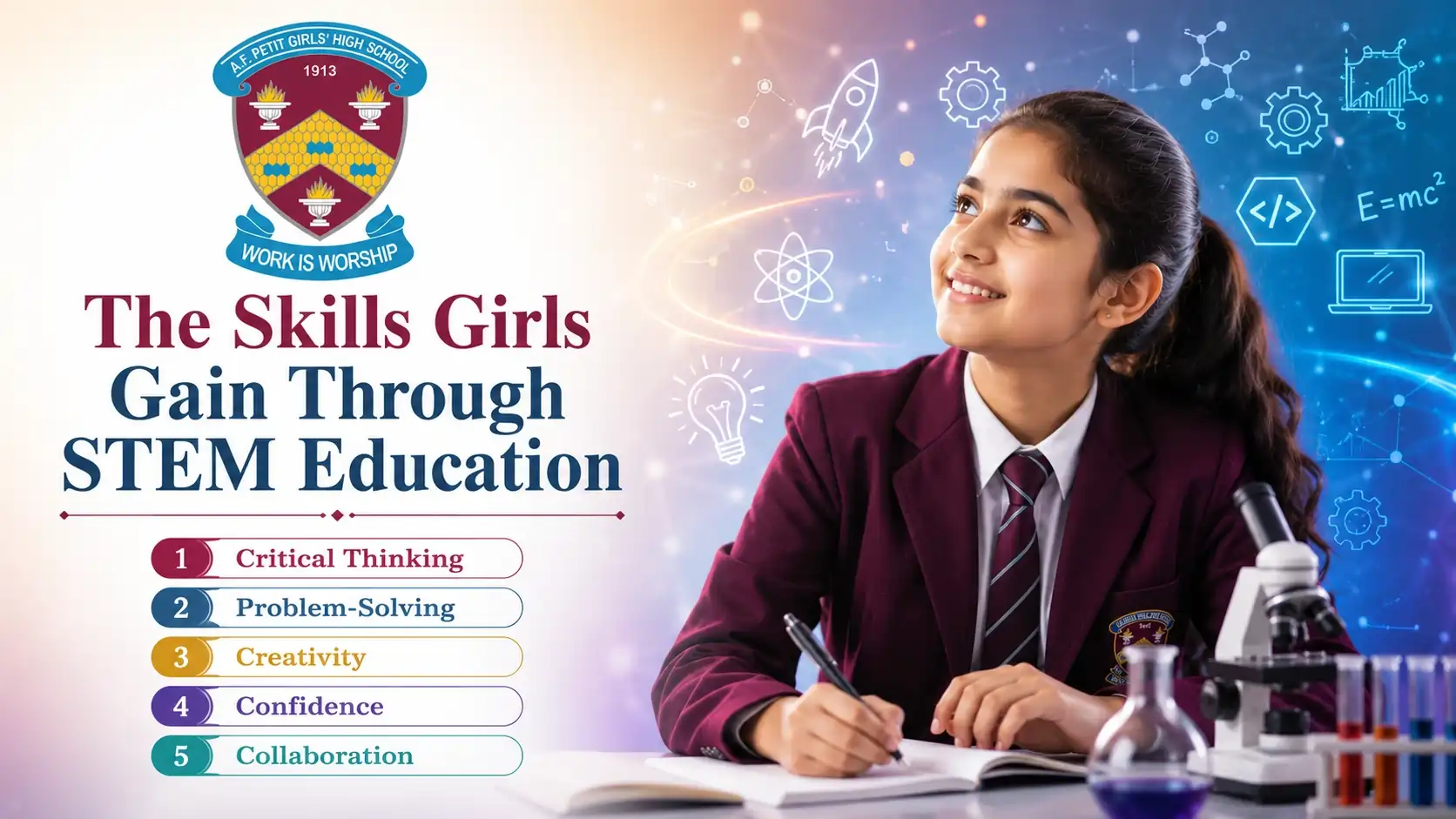
The Skills Girls Gain Through STEM Education

Girl Studying

1. Critical Thinking

Instead of memorizing answers, STEM teaches students to ask better questions.

Girls learn to evaluate information, analyze evidence, and develop logical solutions.

This ability benefits every subject, not just science.

2. Problem-Solving

Life presents problems every day.

Whether designing a bridge, writing computer code, diagnosing diseases, or managing a business, successful professionals solve problems.

STEM develops this mindset from an early age.

3. Creativity

Innovation doesn’t happen without imagination.

Designing sustainable cities, creating medical devices, or inventing environmentally friendly technologies all require creative thinking.

Great STEM education encourages experimentation and original ideas.

4. Confidence

Completing projects, solving engineering challenges, and presenting scientific ideas helps girls believe in their own abilities.

Confidence developed through STEM often carries into leadership roles, public speaking, and future careers.

5. Collaboration

Most real-world innovations happen in teams.

STEM activities encourage collaboration, communication, and respect for different perspectives.

Girls learn how to contribute ideas while working with others toward common goals.

How STEM Builds Future Leaders

Leadership isn’t only about managing people.

It’s about making informed decisions.

It means:

  • Solving challenges calmly.
  • Thinking independently.
  • Communicating ideas clearly.
  • Learning from failure.
  • Taking initiative.

Project-based STEM education naturally develops these leadership qualities.

When students build prototypes, conduct research, or solve practical challenges together, they become confident decision-makers.

Artificial Intelligence Is Making STEM Even More Important

Artificial Intelligence is already changing:

  • Healthcare
  • Banking
  • Agriculture
  • Education
  • Transportation
  • Manufacturing
  • Entertainment
  • Retail
  • Finance

Children entering school today will likely work alongside AI throughout their careers.

That doesn’t mean every student must become a programmer.

Instead, girls should understand:

  • How AI works
  • Ethical use of technology
  • Data literacy
  • Digital citizenship
  • Responsible innovation
  • Human-centered problem-solving

These are becoming essential life skills.

Why Early Exposure Matters

Research consistently shows that children begin developing interests and beliefs about subjects from an early age.

Positive STEM experiences during primary and middle school can significantly influence future confidence and career aspirations.

Simple activities such as:

  • Building models
  • Conducting experiments
  • Coding games
  • Nature exploration
  • Mathematics puzzles
  • Robotics clubs

Help students associate STEM with curiosity rather than difficulty.

Schools that make STEM enjoyable create lifelong learners.

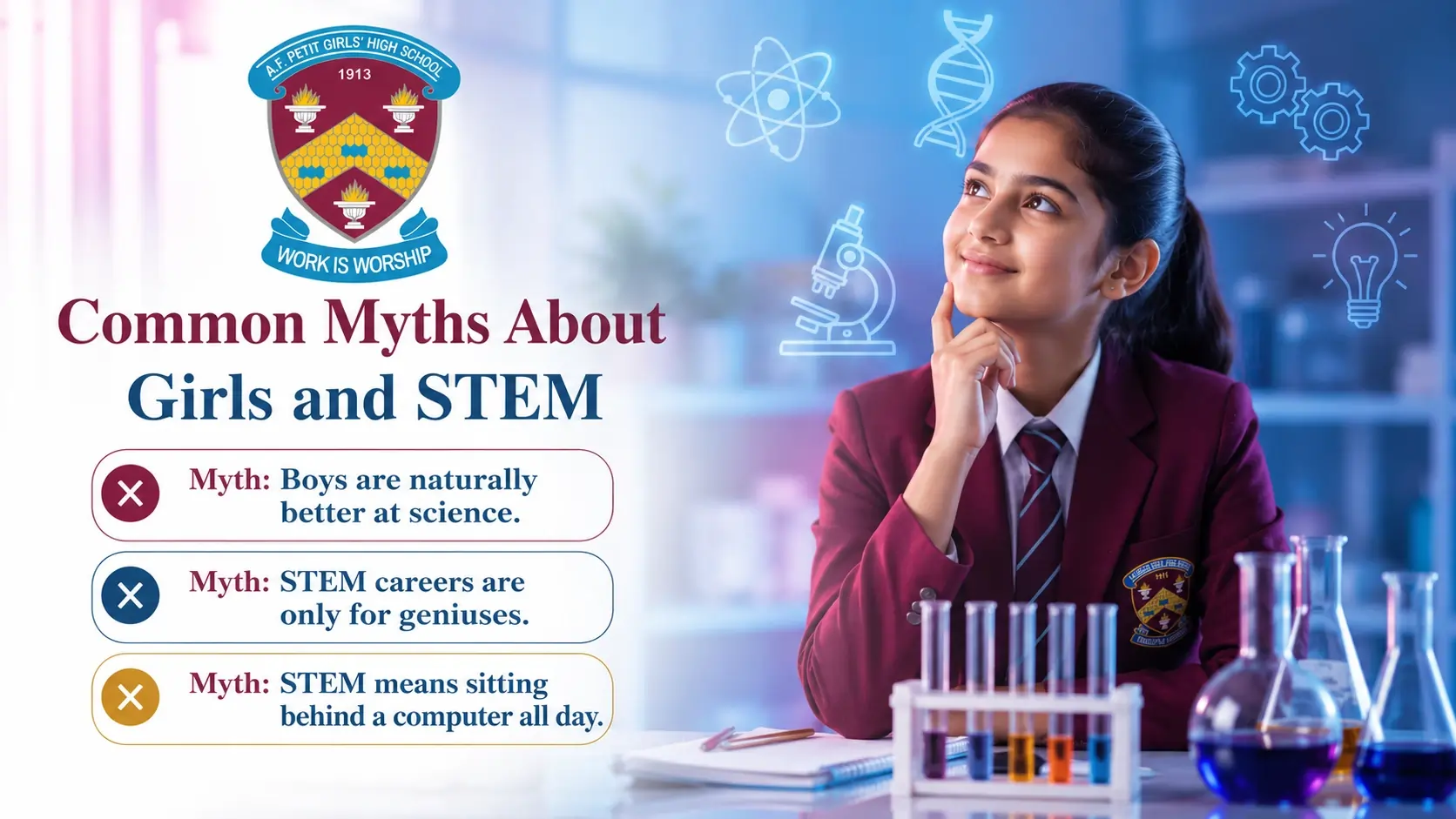
Common Myths About Girls and STEM

Myth: Boys are naturally better at science.

Reality:

Research has repeatedly shown that girls perform equally well in mathematics and science when provided with supportive learning environments and equal opportunities.

Myth: STEM careers are only for geniuses.

Reality:

Success in STEM depends far more on curiosity, persistence, teamwork, and continuous learning than on natural talent.

Myth: STEM means sitting behind a computer all day.

Reality:

STEM careers include:

  • Medicine
  • Environmental conservation
  • Space exploration
  • Biomedical engineering
  • Architecture
  • Renewable energy
  • Product design
  • Agriculture
  • Sports science
  • Psychology research
  • Marine biology

The possibilities are enormous.

How Schools Can Inspire More Girls to Love STEM

The most effective schools don’t just teach STEM; they create experiences.

Examples include:

Project-Based Learning

Students solve practical challenges rather than simply complete worksheets.

Robotics Clubs

Students build, test, and improve robotic systems while learning teamwork.

Coding Activities

Programming encourages logical thinking and creativity.

Science Exhibitions

Presenting projects publicly develops communication skills and confidence.

Innovation Challenges

Students work together to solve real-world environmental or social problems.

Female STEM Role Models

Inviting women scientists, engineers, doctors, entrepreneurs, and researchers to interact with students inspires future aspirations.

What Parents Can Do at Home

Parents don’t need technical backgrounds to encourage STEM.

They can:

  • Encourage questions.
  • Read science books together.
  • Visit science museums.
  • Explore astronomy.
  • Build simple experiments.
  • Support coding platforms.
  • Watch educational documentaries.
  • Celebrate curiosity.
  • Encourage daughters to solve problems independently.

Most importantly, praise effort, not perfection.

Confidence grows through persistence.

STEM Careers Girls Should Watch in the Next Decade

The fastest-growing careers include:

  • Artificial Intelligence Specialist
  • Robotics Engineer
  • Data Scientist
  • Cybersecurity Expert
  • Biomedical Engineer
  • Environmental Scientist
  • Climate Researcher
  • Aerospace Engineer
  • Biotechnology Researcher
  • Renewable Energy Engineer
  • UX Designer
  • Health Technology Specialist
  • Digital Product Designer

Many of these careers barely existed twenty years ago.

The next generation will create entirely new professions.

Girls prepared with STEM skills will be ready to lead them.

Real Women Inspiring the Next Generation

Girls benefit from learning about women who have transformed science and technology.

Examples include:

  • Kalpana Chawla, whose journey inspired millions to dream beyond boundaries.
  • Tessy Thomas, known for her leadership in India’s missile program.
  • Gagandeep Kang, a globally respected Indian scientist in public health and virology.
  • Katherine Johnson, whose mathematical expertise helped make space exploration possible.
  • Fei-Fei Li, a leading researcher in artificial intelligence and computer vision.

Their achievements demonstrate that talent, determination, and education, not gender, shape success in STEM.

Final Thoughts

STEM education is not just about preparing girls for specific careers; it is about preparing them for life in a rapidly changing world.

By nurturing curiosity, encouraging experimentation, and providing opportunities to explore science and technology, schools and parents empower girls to become confident learners, ethical innovators, and future leaders.

The question is no longer whether girls should study STEM. The real question is how we can ensure every girl has the opportunity to discover her potential.

Key Takeaways
  • STEM education equips girls with the skills needed to thrive in an innovation-driven world.
  • Early exposure to science, technology, engineering, and mathematics builds confidence, curiosity, and resilience.
  • Schools and parents share the responsibility of creating supportive, engaging STEM learning experiences.
  • STEM opens doors to diverse careers, from healthcare and environmental science to AI, robotics, and entrepreneurship.
  • Empowering girls through STEM today helps build a more inclusive, innovative, and future-ready society.
Frequently Asked Questions
Why is STEM education important for girls?

STEM education equips girls with critical thinking, creativity, digital literacy, confidence, and problem-solving skills while opening pathways to future-ready careers.

At what age should girls begin STEM learning?

Children can begin exploring STEM concepts as early as preschool through age-appropriate experiments, puzzles, building activities, coding games, and curiosity-driven learning.

Does every girl need to become an engineer?

No. STEM skills benefit careers across healthcare, business, design, education, law, environmental science, entrepreneurship, and many other fields.

How can parents encourage STEM at home?

Support curiosity, provide hands-on learning experiences, explore educational resources together, visit museums, and celebrate effort instead of focusing only on results.

Is AI making STEM education more important?

Yes. As AI becomes integrated into everyday life and work, understanding technology, data, ethics, and problem-solving will become increasingly valuable for students in every career.

Developing Self-Confidence in Girls
Post

The Role of Schools in Developing Self-Confidence in Girls

Why Self-Confidence Matters in a Girl’s Development Self-confidence is one of the most valuable qualities a girl can develop during her formative years. It influences how she approaches challenges, communicates her ideas, builds relationships, and pursues her goals. Confident girls are more likely to participate actively in class, take on leadership roles, express their opinions,...

Why Self-Confidence Matters in a Girl's Development

Self-confidence is one of the most valuable qualities a girl can develop during her formative years. It influences how she approaches challenges, communicates her ideas, builds relationships, and pursues her goals. Confident girls are more likely to participate actively in class, take on leadership roles, express their opinions, and develop resilience when faced with setbacks.

While parents play a crucial role in nurturing confidence, schools are equally important in shaping how girls perceive themselves and their abilities. For over 113 years, Bai Avabai Petit Girl’s High School has witnessed firsthand how the right educational environment can help girls develop the confidence they need to succeed both academically and personally.

Understanding Self-Confidence in Girls

Self-confidence is not about being the loudest student in the room or excelling at every activity. It is about believing in one’s abilities, being willing to try new things, and having the courage to learn from mistakes.

Today, many girls face challenges that can affect their confidence, including:

  • Public speaking anxiety
  • Fear of making mistakes
  • Academic pressure
  • Leadership hesitation
  • Social comparison
  • Fear of judgment from peers

These challenges often begin at an early age, making it essential for schools to create supportive environments where girls can grow, learn, and thrive.

Why Schools Play a Critical Role in Building Self-Confidence

Schools are more than places of academic learning. They are environments where girls spend a significant portion of their formative years, interacting with teachers, peers, and mentors.

A positive school environment helps girls:

  • Discover their strengths and talents
  • Develop communication skills
  • Learn teamwork and collaboration
  • Build resilience through challenges
  • Gain leadership experience
  • Develop independence and decision-making skills

The experiences girls have in school often shape their confidence levels for years to come.

Encouraging Classroom Participation

One of the most effective ways to build self-confidence in girls is by encouraging active classroom participation.

Many students hesitate to answer questions because they fear giving the wrong answer. When teachers create a supportive atmosphere where mistakes are viewed as opportunities to learn, students become more willing to participate.

At schools that prioritize inclusive learning, girls are encouraged to:

  • Ask questions without hesitation
  • Share opinions during discussions
  • Present ideas in front of classmates
  • Engage in collaborative learning activities

Over time, these small moments of participation help girls develop confidence in their voices and abilities.

The Power of Mentorship in Confidence Building

Teachers often have a lasting impact on a student’s confidence.

A strong mentor can help a girl recognize her strengths, overcome self-doubt, and navigate challenges with greater confidence. When teachers provide encouragement, constructive feedback, and emotional support, students feel more comfortable stepping outside their comfort zones.

Effective mentorship helps girls:

  • Build self-belief
  • Develop a growth mindset
  • Learn from failures
  • Set realistic goals
  • Strengthen communication skills

Many confident young women can trace their growth back to a teacher who believed in them when they were unsure of themselves.

Developing Leadership Skills from an Early Age

Confidence grows when girls are trusted with responsibility.

Schools that provide leadership opportunities allow students to experience decision-making, teamwork, and accountability firsthand. Leadership roles can include:

  • Class representatives
  • House captains
  • Student council members
  • Event coordinators
  • Club leaders

These experiences help girls understand that their ideas matter and that they are capable of influencing positive outcomes.

One of the most important lessons schools can teach is that leadership is not about being perfect; it is about taking initiative, learning continuously, and helping others succeed.

How Performing Arts Help Girls Find Their Voice

Performing arts can play a transformative role in building self-confidence.

Activities such as drama, music, dance, public speaking, and elocution encourage girls to express themselves creatively while overcoming stage fright and self-consciousness.

Consider a shy primary-school student who initially avoids speaking in front of groups. Through participation in a school theatre production, she gradually becomes comfortable performing before an audience. The confidence gained on stage often extends beyond performances and positively impacts classroom participation, social interactions, and communication skills.

Performing arts provide a safe environment where girls can take risks, develop self-expression, and celebrate personal growth.

Real-Life Example: From Hesitation to Confidence

A common example seen in schools involves students who are reluctant to participate due to fear of making mistakes.

Imagine a middle-school student who rarely speaks during class discussions. With consistent encouragement from teachers and opportunities to present small assignments, she gradually begins contributing her ideas. As her confidence grows, she volunteers for school events and eventually participates in public speaking activities.

The transformation is often remarkable. Not only does her communication improve, but her academic performance and overall engagement also increase.

These stories demonstrate that confidence is not an innate trait; it is developed through encouragement, practice, and positive experiences.

The Link Between Confidence and Academic Success

There is a strong connection between self-confidence and academic achievement.

Confident students are more likely to:

  • Ask questions when they need clarification
  • Participate in classroom discussions
  • Take on challenging assignments
  • Persevere through difficulties
  • Seek help when necessary

As a result, they often experience improved academic outcomes and greater enthusiasm for learning.

Confidence helps girls move beyond the fear of failure and focus on growth and improvement.

How Schools and Parents Can Work Together

The strongest confidence-building efforts occur when schools and parents work together.

Parents can support confidence development by:

  • Encouraging effort rather than perfection
  • Celebrating progress and perseverance
  • Allowing children to solve age-appropriate problems independently
  • Supporting participation in extracurricular activities
  • Avoiding excessive comparisons with other children

When parents and educators share the goal of empowering girls, students receive consistent messages that reinforce self-belief and resilience.

A Different Perspective on Building Confidence

Many people believe confidence comes primarily from praise.

However, years of educational experience suggest that genuine confidence is built through responsibility, participation, and resilience.

Girls become truly confident when they are:

  • Trusted with meaningful responsibilities
  • Encouraged to share their opinions
  • Allowed to make mistakes without fear
  • Given opportunities to lead
  • Supported as they overcome challenges

Confidence is not created by protecting children from failure. It is developed by helping them learn that they can recover, adapt, and succeed despite setbacks.

Conclusion

The importance of confidence in girls cannot be overstated. It influences academic achievement, communication skills, leadership abilities, and overall personal development.

Schools play a vital role in nurturing self-confidence by creating environments where girls feel supported, valued, and empowered to grow. Through classroom participation, mentorship, leadership opportunities, and performing arts, schools help girls develop the belief that their voices matter and their potential is limitless.

At Bai Avabai Petit Girl’s High School, over 113 years of educational experience have reinforced a simple truth: when girls are given opportunities to participate, lead, and learn from their experiences, they develop the confidence needed to thrive in school and beyond.

For parents, one of the greatest gifts you can give your daughter is the encouragement to participate, express herself, and embrace new opportunities. Confidence grows one experience at a time, and the right school environment can make all the difference.

Post

Building Healthy Friendships in School Years | Bai AvaBai Petit

Healthy friendships are an important part of a child’s school experience. They help students build confidence, improve communication skills, manage challenges, and develop emotional intelligence. By practicing kindness, respect, trust, and inclusivity, students can create meaningful friendships that support their growth both inside and outside the classroom. How Can Students Build Healthy Friendships in School?...

Healthy friendships are an important part of a child’s school experience. They help students build confidence, improve communication skills, manage challenges, and develop emotional intelligence. By practicing kindness, respect, trust, and inclusivity, students can create meaningful friendships that support their growth both inside and outside the classroom.

How Can Students Build Healthy Friendships in

School?

Students can build healthy friendships by being respectful, listening to others, communicating honestly, and supporting their peers during both successes and challenges. Good friendships are built on trust, kindness, and mutual understanding. These relationships help students feel more connected, confident, and motivated throughout their school journey.

Parents looking for the Best girls school in Mumbai often consider how a school helps students develop not only academically but also socially and emotionally. A positive school environment can make a significant difference in helping children build strong and lasting friendships.

Why Are Friendships Important During School Years?

Friendships play a major role in a student’s overall development. While classrooms provide academic learning, friendships teach valuable life skills such as cooperation, empathy, leadership, and conflict resolution.

Studies in child development have shown that students with positive peer relationships often demonstrate higher levels of engagement in school activities and better emotional well-being. Having trusted friends can also reduce feelings of stress and help students navigate challenges more effectively.

For example, imagine a student participating in her first inter-school competition. While she may feel nervous, encouragement from friends can boost her confidence and help her perform better. These everyday experiences contribute to personal growth and resilience.

Qualities of Healthy Friendships

1. Mutual Respect

Respect is the foundation of every strong friendship. Good friends appreciate each other’s opinions, interests, and individuality.

A student who enjoys sports may have a friend who prefers art or music. Respecting these differences allows friendships to flourish and teaches students the value of diversity.

2. Trust and Honesty

Trust helps students feel comfortable sharing their thoughts and feelings without fear of judgment. Honest communication strengthens relationships and helps prevent misunderstandings.

When trust is present, students are more likely to support each other and build lasting connections.

3. Support and Encouragement

Healthy friends celebrate achievements and offer support during difficult moments. Whether preparing for exams, participating in a school event, or facing personal challenges, encouragement from friends can make a meaningful difference.

4. Positive Influence

Friends often influence one another’s attitudes and behaviors. Positive friendships encourage students to stay focused, participate actively in school activities, and develop healthy habits.

Learning Through Friendship Challenges

Friendships are rewarding, but they can also involve challenges that help students learn important life lessons.

  • Resolving Conflicts

Disagreements are a natural part of any relationship. Learning to communicate respectfully and listen to different viewpoints helps students resolve conflicts constructively.

  • Managing Peer Pressure

Students may sometimes feel pressured to fit in with a group. Healthy friendships allow individuals to be themselves without compromising their values or beliefs.

  • Practicing Inclusion

Every student deserves to feel welcomed and valued. Making an effort to include classmates in activities helps create a positive and supportive school culture.

How Schools Encourage Strong Friendships

Schools play an important role in helping students develop meaningful social connections. Activities such as group projects, sports competitions, cultural programs, student councils, and community initiatives encourage teamwork and collaboration.

A Top girls school in Mumbai understands that social development is an essential part of education. When students are given opportunities to work together, they learn how to communicate effectively, respect different perspectives, and build strong interpersonal skills.

These experiences not only strengthen friendships but also prepare students for future academic and professional environments where teamwork is essential.

The Role of Parents in Supporting Friendships

Parents can help children build healthy friendships by encouraging open communication and teaching important social skills.

Some practical ways to support children include:

  • Talking regularly about friendship experiences
  • Teaching empathy and active listening
  • Encouraging respect for others
  • Helping children navigate disagreements calmly
  • Supporting participation in extracurricular activities

These simple actions help students develop confidence and build positive relationships with their peers.

Friendship in the Digital Age

Today’s students interact both in person and online. While technology offers many ways to stay connected, it is important to use digital platforms responsibly.

Students should learn:

  • Respectful online communication
  • Responsible social media behavior
  • Online safety practices
  • How to respond to cyberbullying appropriately

As a respected Girls school in Bandra, Bai AvaBai Petit Girls High School encourages students to develop healthy communication habits both online and offline, helping them build meaningful and respectful relationships in all aspects of life.

Lifelong Benefits of Healthy Friendships

The benefits of friendship extend far beyond the school years. Through positive relationships, students develop essential life skills that support future success.

These include:

  • Effective communication
  • Emotional intelligence
  • Leadership abilities
  • Teamwork and collaboration
  • Problem-solving skills

Many successful professionals credit their ability to work with others and build strong relationships as key factors in their achievements. These skills often begin developing through school friendships.

Conclusion

Healthy friendships are a valuable part of every student’s educational journey. They provide emotional support, build confidence, encourage personal growth, and help students develop important life skills. By fostering respect, trust, kindness, and inclusivity, schools and families can help students create meaningful friendships that last a lifetime.

For families seeking a Best ICSE girls school in Mumbai, choosing a school that prioritizes both academic excellence and character development can provide students with the foundation they need to thrive academically, socially, and emotionally.

Key Takeaways
  • Healthy friendships are built on trust, respect, honesty, and support.
  • Positive friendships improve confidence, emotional well-being, and social skills.
  • Schools and parents play an important role in helping students develop meaningful relationships.
  • Learning to manage conflicts and practice inclusion strengthens friendships.
  • The communication, teamwork, and leadership skills gained through friendships benefit students throughout their lives.
Post

The Importance of Mental Health Support in Schools

Mental health support in schools is essential for helping students manage stress, improve academic performance, build confidence, and develop healthy relationships. With increasing academic pressure, social media influence, and emotional challenges, schools must provide a safe and supportive environment where students can thrive. By offering counseling, awareness programs, and emotional guidance, schools help students become...

Mental health support in schools is essential for helping students manage stress, improve academic performance, build confidence, and develop healthy relationships. With increasing academic pressure, social media influence, and emotional challenges, schools must provide a safe and supportive environment where students can thrive. By offering counseling, awareness programs, and emotional guidance, schools help students become resilient, successful, and well-rounded individuals.

Why Is Mental Health Support Important in Schools?

When choosing the Best girls school in Mumbai, parents often focus on academics, extracurricular activities, and facilities. However, one equally important factor is mental health support. A strong mental health program helps students manage challenges, stay focused on learning, and develop the emotional skills needed for lifelong success.

Mental health support is important because it directly impacts how students think, learn, communicate, and handle everyday situations. Students who feel emotionally supported are more likely to perform well academically, participate actively in school activities, and build meaningful relationships.

In today’s fast-changing world, education is no longer limited to textbooks and examinations. Schools have a responsibility to nurture the emotional well-being of students alongside their academic growth.

Understanding Mental Health Among Students

Mental health refers to a person’s emotional, psychological, and social well-being. It affects how students cope with stress, make decisions, and interact with others.

According to the World Health Organization (WHO), approximately 1 in 7 adolescents between the ages of 10 and 19 experiences a mental health condition. Unfortunately, many of these challenges go unnoticed because students may hesitate to seek help or may not know how to express their feelings.

Some common concerns faced by students include:

  1. Academic stress
  2. Anxiety and worry
  3. Low self-esteem
  4. Peer pressure
  5. Social isolation
  6. Cyberbullying
  7. Fear of failure

When these issues are addressed early, students are better equipped to manage their emotions and continue progressing academically and personally.

Why Mental Health Support Is More Important Than Ever
  • Academic Pressure

Modern students face significant pressure to achieve high grades and secure opportunities for higher education. While striving for excellence is important, excessive pressure can negatively affect mental well-being.

For example, students preparing for board examinations may spend several hours each day studying while simultaneously worrying about future career paths. Over time, this can lead to stress, anxiety, and burnout.

Schools that provide emotional support can help students develop healthy study habits and maintain a balanced approach to learning.

  • Social Media and Digital Influence

Today’s students are growing up in a digital world where social media plays a major role in daily life.

While social platforms offer opportunities for learning and connection, they can also contribute to:

  1. Constant comparison with peers
  2. Unrealistic beauty standards
  3. Fear of missing out (FOMO)
  4. Online harassment and cyberbullying
  5. Reduced self-confidence

Studies have shown that teenagers spend several hours online each day. Without proper guidance, excessive social media use can affect emotional health and self-esteem.

  • Personal and Family Challenges

Students may also face difficulties related to family situations, friendships, financial concerns, or personal insecurities.

Adolescence is a period of rapid emotional and physical development, making it especially important for young people to have access to trusted adults who can guide and support them.

The Benefits of Mental Health Support in Schools


A forward-thinking Girls school in Mumbai understands that emotional well-being is just as important as academic achievement. Supporting students mentally and emotionally creates lasting benefits both inside and outside the classroom.

  • Improved Academic Performance

Students who feel emotionally secure tend to concentrate better, participate more actively in class, and perform well in examinations.

Research consistently shows a strong connection between mental well-being and academic success. When students are not overwhelmed by stress or anxiety, they are better able to retain information and engage in learning.

  • Increased Confidence and Self-Esteem

Mental health support helps students recognize their strengths and develop a positive self-image.

A confident student is more likely to take on leadership roles, participate in extracurricular activities, and pursue new opportunities without fear of failure.

  • Better Emotional Resilience

Life presents many challenges, from academic setbacks to personal disappointments. Mental health education teaches students how to cope with these situations healthily and constructively.

For instance, a student who receives a lower-than-expected exam score can learn to view it as a learning opportunity rather than a personal failure.

  • Stronger Relationships

Students who understand and manage their emotions effectively often develop healthier friendships and stronger communication skills.

They are also more likely to show empathy, resolve conflicts peacefully, and contribute positively to the school community.

How Schools Can Support Student Mental Health


  • Creating a Safe and Inclusive Environment

Students should feel comfortable expressing themselves without fear of criticism or judgment.

Schools can create such environments by:

  1. Encouraging open communication
  2. Promoting kindness and respect
  3. Celebrating diversity
  4. Preventing bullying
  5. Supporting student voices

When students feel safe, they are more likely to seek help when needed.

  • Providing Access to Counseling

Professional counseling services offer students a confidential space where they can discuss concerns related to academics, friendships, family situations, or personal challenges.

Early intervention often prevents small issues from developing into larger problems.

  • Conducting Mental Health Awareness Programs

Workshops and awareness sessions help students understand the importance of emotional well-being.

Topics may include:

  1. Stress management
  2. Emotional intelligence
  3. Time management
  4. Mindfulness
  5. Digital wellness
  6. Self-care practices

Such programs help normalize conversations about mental health and reduce stigma.

  • Empowering Teachers

Teachers spend significant time with students and are often among the first to notice changes in behavior.

Warning signs may include:

  1. Sudden decline in grades
  2. Withdrawal from social activities
  3. Frequent absences
  4. Lack of participation
  5. Mood changes

Training teachers to recognize these signs can lead to timely support and intervention.

Supporting the Mental Well-Being of Girls

Girls often face unique emotional and social challenges during their school years. Academic expectations, peer relationships, self-image concerns, and future aspirations can all influence mental health.

Schools that focus on girls’ education have an important opportunity to build confidence, leadership skills, and emotional resilience.

A Top ICSE girls school in Mumbai understands that student success extends beyond examination results. By encouraging self-expression, promoting self-confidence, and fostering emotional intelligence, schools can help young girls become capable and independent individuals.

At Bai AvaBai Petit Girls High School, students are encouraged to grow academically while also developing the emotional strength needed to navigate life’s challenges successfully.

Practical Tips for Students to Maintain Good Mental Health
  • Get Enough Sleep

Health experts recommend that teenagers get between 8 and 10 hours of sleep per night. Adequate sleep improves concentration, memory, and emotional regulation.

  • Stay Physically Active

Regular exercise has been proven to reduce stress and improve mood. Activities such as sports, dance, yoga, or walking can positively impact mental well-being.

  • Build Strong Support Systems

Students should maintain open communication with trusted friends, family members, teachers, or mentors. Talking about concerns often helps reduce stress and provides valuable guidance.

  • Practice Mindfulness

Mindfulness activities such as meditation, journaling, deep breathing, and gratitude exercises can help students stay calm and focused.

  • Seek Help When Needed

Seeking support is a sign of strength. Students should feel comfortable reaching out whenever they need guidance or assistance.

Conclusion

Mental health support is no longer an optional part of education; it is a necessity. Students face increasing academic, social, and emotional pressures that can impact their overall development. Schools that prioritize mental well-being create environments where students feel safe, supported, and empowered to reach their full potential.

At Bai AvaBai Petit Girls High School, the focus extends beyond academic excellence to nurturing confident, resilient, and compassionate young women who are prepared for future success.

Parents looking for a Top Girls school in Mumbai should consider institutions that value both educational achievement and emotional well-being, ensuring students receive a truly holistic education.

Key Takeaways
  • Mental health support helps students manage stress, improve focus, and perform better academically.
  • Early counseling and awareness programs can prevent small emotional challenges from becoming larger issues.
  • Schools play a vital role in creating safe, inclusive, and supportive learning environments.
  • Emotional well-being contributes to confidence, resilience, healthy relationships, and personal growth.
  • A balanced education that prioritizes both academics and mental health prepares students for lifelong success.
Post

Managing Stress and Anxiety During Exams

Exam stress is common among students, but it can be managed with proper planning, healthy habits, positive thinking, and emotional support. Simple techniques like creating a study schedule, taking regular breaks, sleeping well, staying active, and avoiding comparison with others can help students stay calm and focused during exams.   How Can Students Manage Stress...

Exam stress is common among students, but it can be managed with proper planning, healthy habits, positive thinking, and emotional support. Simple techniques like creating a study schedule, taking regular breaks, sleeping well, staying active, and avoiding comparison with others can help students stay calm and focused during exams.


How Can Students Manage Stress and Anxiety During Exams?

Students can manage exam stress by preparing early, following a realistic study timetable, getting enough sleep, eating healthy food, taking breaks, practicing relaxation techniques, and maintaining a positive mindset. Parents and teachers also play an important role by offering emotional support instead of adding pressure.

Exams are an important part of academic life, but they often bring stress and anxiety for students of all ages. Feeling nervous before a test is completely normal. In fact, a moderate level of stress can sometimes improve concentration and motivation. However, excessive stress can affect memory, confidence, sleep, and overall performance.

According to a 2024 student wellness survey in India, nearly 78% of students reported experiencing exam-related stress, while more than 50% said anxiety affected their concentration levels during preparation. This highlights the importance of teaching students healthy ways to handle academic pressure.

At Bai AvaBai Petit Girls High School, the focus is not only on academic excellence but also on supporting students emotionally and mentally throughout their learning journey.


Why Exam Stress Happens

Exam stress usually develops because students fear failure, high expectations, competition, or lack of preparation. Sometimes students also feel overwhelmed by large portions, time pressure, or comparing themselves with others.

Common causes of exam anxiety include:

  • Fear of low marks
  • Last-minute preparation
  • Pressure from peers or family
  • Lack of confidence
  • Poor time management
  • Negative thinking
  • Excessive screen distractions

For example, a student who starts studying only a few days before exams may feel panic because the workload seems impossible to complete in time. On the other hand, students who prepare gradually often feel more confident and less stressed.

Understanding the cause of stress is the first step toward managing it effectively.


Start Preparing Early

One of the best ways to reduce exam anxiety is to avoid last-minute studying. Preparing early gives students enough time to revise topics calmly without feeling rushed.

Students can:

  • Divide subjects into smaller portions
  • Set daily study goals
  • Revise regularly instead of cramming
  • Focus on understanding concepts instead of memorizing everything

For example, studying two chapters daily for a month is far more effective than attempting the entire syllabus in the final week.

Research shows that students who follow a planned study routine experience lower anxiety levels compared to those who rely on last-minute preparation.

Many parents searching for the Best Girls school in Mumbai often value schools that teach students effective study habits alongside academics.


Create a Realistic Study Timetable

A proper study timetable helps students stay organized and reduces unnecessary pressure. However, the schedule should be practical and balanced.

An effective timetable should include:

  • Fixed study hours
  • Short breaks between sessions
  • Time for revision
  • Sleep and relaxation
  • Physical activity

For example, studying continuously for six hours without breaks can reduce concentration and increase fatigue. Instead, students can study for 45-50 minutes followed by a 10-minute break.

Using techniques like the Pomodoro Method, where students study in short, focused intervals, can improve productivity and reduce stress.


Sleep Is More Important Than Students Realize

Many students sacrifice sleep during exams, believing that staying awake longer improves preparation. In reality, lack of sleep affects concentration, memory, mood, and problem-solving abilities.

According to health experts, teenagers should ideally get 8-9 hours of sleep every night. Sleep helps the brain process and store information learned during the day.

Students who stay awake all night before exams often feel tired, anxious, and unable to focus properly during the test.

Good sleep habits include:

  • Sleeping at a fixed time
  • Avoiding phones before bed
  • Reducing caffeine late at night
  • Keeping the study environment calm and quiet

Healthy sleep is one of the simplest yet most effective ways to manage exam stress.


Healthy Food Helps the Brain Perform Better

Nutrition plays a major role in mental focus and emotional stability during exams. Skipping meals or eating excessive junk food can make students feel tired and irritable.

Brain-friendly foods include:

  • Fruits and vegetables
  • Nuts and dry fruits
  • Whole grains
  • Eggs and dairy products
  • Plenty of water

For example, almonds and walnuts are known to support memory and concentration, while staying hydrated helps prevent headaches and fatigue.

Students should also avoid consuming too much sugar or energy drinks during exam time, as they may increase restlessness and reduce focus later.


Physical Activity Reduces Anxiety

Exercise is not only good for physical health but also for mental well-being. Even light physical activity helps reduce stress hormones and improve mood.

Activities that help students relax include:

  • Walking
  • Yoga
  • Stretching exercises
  • Cycling
  • Dancing
  • Sports and outdoor games

According to mental health studies, just 20-30 minutes of physical activity daily can significantly reduce anxiety levels and improve concentration.

Schools that encourage sports and wellness activities often help students maintain better emotional balance during academic pressure.

This balanced approach is one reason why many parents consider a Girls school in Mumbai that focuses on both academics and student well-being.


Avoid Comparing Yourself With Others

One major source of student anxiety is comparison. Students often compare marks, study speed, or preparation levels with classmates, which can reduce confidence.

Every student learns differently. Some may understand concepts quickly, while others need more revision time. Comparing progress only increases stress unnecessarily.

Instead of focusing on others, students should:

  • Track their own improvement
  • Set realistic goals
  • Celebrate small achievements
  • Focus on consistent effort

For example, improving from 60% to 75% through hard work is a meaningful achievement that deserves recognition.

Confidence grows when students focus on personal progress rather than competition alone.


Practice Relaxation Techniques

Simple relaxation exercises can help students stay calm before and during exams.

Some useful techniques include:

Deep Breathing

Taking slow, deep breaths helps relax the mind and reduce nervousness within minutes.

Meditation

Even 10 minutes of meditation daily can improve focus and emotional stability.

Positive Self-Talk

Instead of thinking “I will fail,” students should remind themselves, “I have prepared well and will do my best.”

Listening to Calm Music

Soft instrumental music can help students relax during study breaks.

These small habits can make a big difference in managing exam pressure effectively.


The Role of Parents and Teachers

Parents and teachers strongly influence how students handle stress. Excessive pressure or constant comparison can increase anxiety levels significantly.

Supportive adults can help by:

  • Encouraging effort instead of only marks
  • Listening patiently to student concerns
  • Avoiding unrealistic expectations
  • Appreciating improvements
  • Helping students maintain balance

For example, students perform better emotionally when parents motivate them calmly instead of repeatedly discussing exam pressure.

Schools that create supportive environments often help students become more confident and emotionally strong.

Many families looking for the Top Girls school in Bandra prioritize institutions that focus on both academic growth and emotional well-being.


Exams Do Not Define a Student’s Future

One of the most important lessons students should understand is that exams are only one part of life. Marks are important, but they do not define intelligence, talent, or future success completely.

Many successful individuals faced academic struggles at some point, yet achieved great success through creativity, determination, communication skills, and persistence.

Students should view exams as opportunities to learn and improve rather than as a measure of self-worth.

Schools that encourage holistic development help students build confidence beyond academic performance alone.

This broader educational approach is often associated with institutions recognized among the Best ICSE girls school in Mumbai, where equal importance is given to academics, creativity, confidence, and emotional development.


Conclusion

Managing stress and anxiety during exams is essential for both academic success and mental well-being. With proper preparation, healthy habits, positive thinking, and emotional support, students can handle exam pressure more confidently and calmly.

Simple changes like following a study timetable, sleeping well, eating healthy food, exercising regularly, and avoiding comparison can significantly reduce anxiety levels.

At Bai AvaBai Petit Girls High School, students are encouraged to develop not only strong academic skills but also emotional resilience, confidence, and healthy study habits that support long-term success.

Exams are important, but a student’s well-being, confidence, and personal growth matter just as much.


Key Takeaways
  • Early preparation and realistic study schedules help reduce exam stress.
  • Proper sleep, healthy food, and physical activity improve concentration and emotional balance.
  • Avoiding comparison with others helps build confidence and reduce anxiety.
  • Relaxation techniques like deep breathing and meditation can calm the mind before exams.
  • Emotional support from parents and teachers plays a major role in helping students manage pressure positively.

Post

How Schools Can Make Learning More Fun and Interactive

Interactive learning helps students enjoy education while improving creativity, confidence, teamwork, and academic performance. Schools can make learning more engaging through technology, activity-based teaching, group discussions, sports, arts, practical experiences, and supportive classrooms. Modern students learn better when they actively participate instead of only memorizing lessons from textbooks.   How Can Schools Make Learning More...

Interactive learning helps students enjoy education while improving creativity, confidence, teamwork, and academic performance. Schools can make learning more engaging through technology, activity-based teaching, group discussions, sports, arts, practical experiences, and supportive classrooms. Modern students learn better when they actively participate instead of only memorizing lessons from textbooks.


How Can Schools Make Learning More Fun and Interactive?

Schools can make learning more enjoyable by creating classrooms where students actively participate in activities, discussions, projects, experiments, and creative exercises instead of only listening to lectures. Using technology, encouraging teamwork, including sports and arts, organizing practical learning experiences, and building a positive environment can greatly improve student engagement and understanding.

Research shows that students remember concepts better when they learn through activities and real-life experiences. According to educational studies, active learning methods can improve student retention rates by nearly 70% compared to traditional passive learning techniques.

At Bai AvaBai Petit Girls High School, education goes beyond textbooks by focusing on engaging learning experiences that help students grow academically, socially, and creatively.


Why Interactive Learning Is Important Today

The way children learn has changed significantly over the years. Modern students are surrounded by digital content, videos, games, and instant information every day. Because of this, traditional classroom methods alone may not always keep students interested.

Interactive learning helps students:

  • Understand topics more clearly
  • Stay focused in class
  • Improve communication skills
  • Build confidence
  • Develop teamwork and leadership abilities
  • Enjoy the learning process

For example, students are more likely to remember a science concept after conducting an experiment themselves rather than simply reading about it in a textbook.

Schools that encourage active participation often see better classroom involvement and stronger academic performance.


Using Technology to Improve Classroom Learning

Technology has become one of the biggest tools for interactive education. Smart boards, educational videos, online quizzes, presentations, and digital learning platforms can make lessons more engaging and easier to understand.

For instance:

  • Mathematics becomes easier through animated problem-solving videos
  • Geography lessons become more interesting with virtual maps and visuals
  • Language classes improve through storytelling apps and interactive reading sessions
  • Science concepts become clearer through simulations and demonstrations

However, technology should support learning, not replace human interaction. Teachers still play the most important role in guiding students and encouraging curiosity.

Many parents searching for the Best Girls school in Mumbai now look for schools that combine academic excellence with modern teaching methods.


Activity-Based Learning Makes Concepts Easier

Activity-based learning allows students to learn by doing. Instead of memorizing information, students participate in hands-on experiences that help them understand topics practically.

Examples of activity-based learning include:

  • Science experiments
  • Group projects
  • Quiz competitions
  • Classroom debates
  • Educational games
  • Art and craft activities
  • Role-playing exercises

For example, students studying environmental science can participate in recycling projects or gardening activities to understand sustainability better.

The National Education Policy (NEP) in India also encourages experiential learning because it helps students develop critical thinking and problem-solving skills.


Group Learning Encourages Teamwork

Students often learn better when they work together. Group learning helps children exchange ideas, solve problems collectively, and improve communication skills.

Schools can encourage collaboration through:

  • Team presentations
  • Group assignments
  • Science fairs
  • Creative workshops
  • Classroom discussions
  • Student clubs and activities

These experiences prepare students for real-world situations where teamwork and collaboration are essential skills.

Interactive group learning also helps shy students become more confident while improving classroom participation overall.


Sports and Arts Are Equally Important

Education is not limited to academics alone. Sports, music, dance, drama, and creative activities play a major role in a student’s overall development.

Studies have shown that students involved in extracurricular activities often perform better academically because these activities improve focus, discipline, and emotional well-being.

Benefits of extracurricular activities include:

  • Better physical fitness
  • Improved concentration
  • Stronger leadership skills
  • Increased confidence
  • Better stress management

For example, students participating in school sports learn teamwork and discipline, while theatre activities help improve communication and public speaking skills.

This balanced approach is one reason why many families searching for a Girls school in Mumbai value institutions that focus on both academics and overall personality development.


Real-Life Learning Creates Better Understanding

Students understand lessons more effectively when they can connect them to everyday life. Practical learning experiences help children see the real-world importance of education.

Some effective examples include:

  • Budgeting exercises during mathematics lessons
  • Nature walks for environmental studies
  • Mock business activities for entrepreneurship learning
  • Public speaking opportunities during assemblies
  • Field trips to museums and science centres

For instance, a visit to a historical monument can make history lessons far more engaging than simply memorizing dates and facts from a textbook.

Practical learning also improves curiosity and encourages students to ask questions.


Creating a Positive Classroom Environment

A supportive classroom environment plays a major role in student engagement. Students participate more actively when they feel respected, encouraged, and comfortable expressing themselves.

Teachers can create a positive learning environment by:

  • Encouraging questions
  • Appreciating student efforts
  • Supporting creativity
  • Providing constructive feedback
  • Understanding different learning styles

Every child learns differently. Some students understand concepts visually, while others learn better through listening or hands-on activities. Interactive teaching methods help include all types of learners in the classroom.

Schools that create supportive environments often help students become more confident and motivated learners.

Many parents looking for the Top Girls school in Bandra often prioritize schools that focus on student well-being along with academics.


Teachers as Mentors and Guides

Teachers today are not only instructors but also mentors who guide students emotionally and academically. A supportive teacher can inspire students to become curious, confident, and independent thinkers.

Good mentorship helps students:

  • Build self-confidence
  • Handle academic pressure
  • Improve communication skills
  • Develop positive habits
  • Stay motivated toward their goals

Interactive classrooms become more successful when teachers encourage discussions, creativity, and independent thinking rather than only focusing on exams.


Preparing Students for the Future

The future workplace will require skills such as creativity, adaptability, communication, teamwork, and critical thinking. Interactive learning helps students develop these abilities from a young age.

Education today is no longer only about scoring marks. Students also need practical exposure, leadership opportunities, and emotional intelligence to succeed in life.

Schools that adopt modern and engaging teaching methods help students become future-ready individuals capable of handling real-world challenges confidently.

This holistic approach is one of the reasons institutions aim to be recognized among the Best ICSE girls school in Mumbai by combining strong academics with skill-based learning.


Conclusion

Making learning fun and interactive helps students enjoy education while improving understanding, creativity, and confidence. Through technology, activity-based teaching, teamwork, extracurricular activities, and practical experiences, schools can create classrooms that inspire curiosity and active participation.

Students learn best when they are encouraged to explore ideas, ask questions, and participate in meaningful experiences beyond textbooks. Interactive education not only improves academic performance but also prepares children for future challenges and opportunities.

At Bai AvaBai Petit Girls High School, the focus remains on creating engaging learning environments that support both academic excellence and overall student development.


Key Takeaways
  • Interactive learning improves student engagement, understanding, and confidence.
  • Technology, activities, group learning, and practical experiences make education more enjoyable.
  • Sports, arts, and extracurricular activities support overall personality development.
  • Positive classrooms and supportive teachers help students participate actively and think creatively.
  • Modern learning methods prepare students with real-world skills needed for future success.